
The license gets attention. Reliability, safety, communication, and attitude determine what happens next.
By Andrew McLoughlin
Vice President of Admissions & Operations
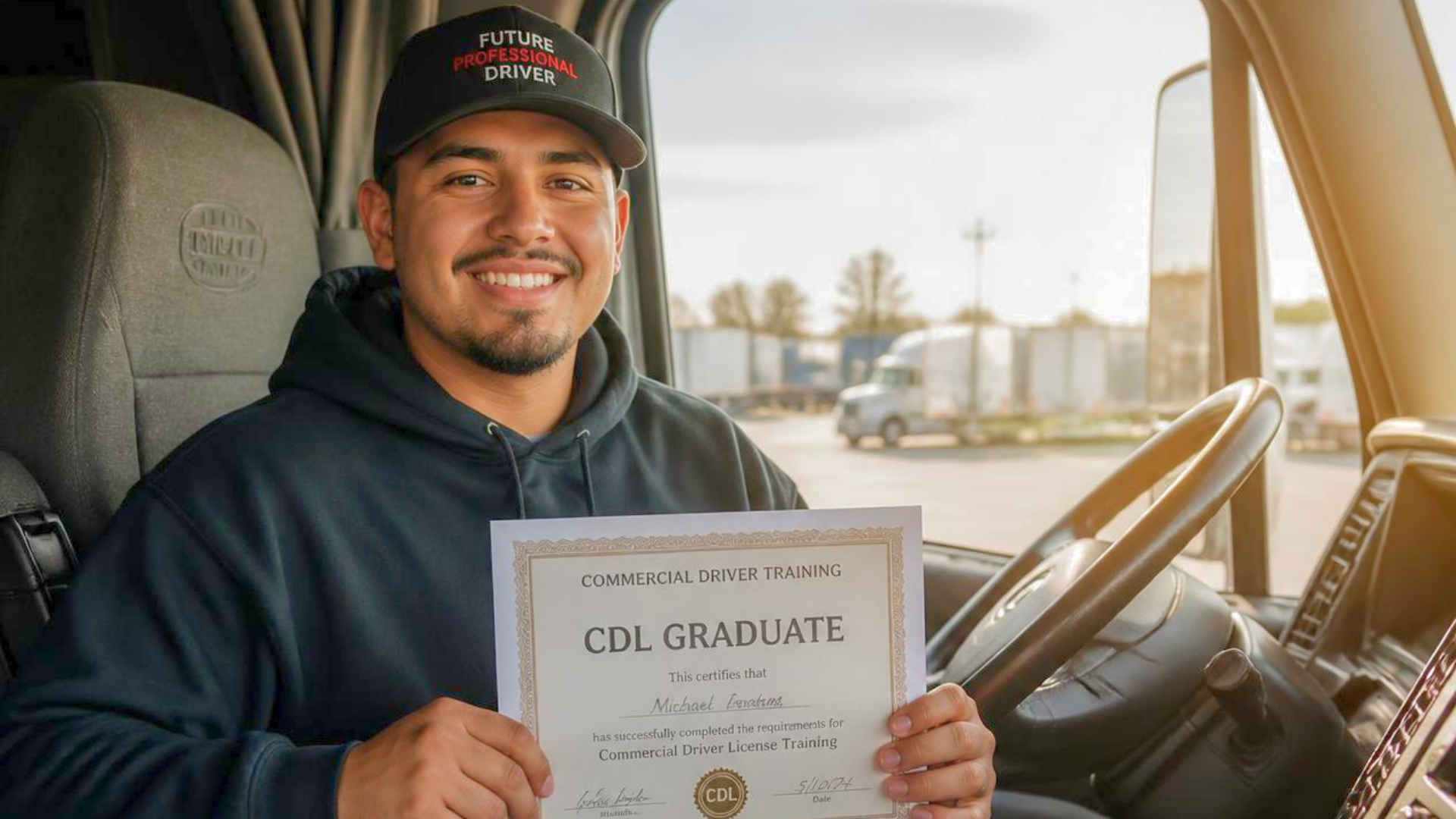
A new CDL graduate may walk into an interview thinking the hardest part is over. Most employers see the license as evidence that the applicant can now begin proving himself or herself.
That gap in expectations creates frustration on both sides. Graduates may believe a license guarantees immediate access to the route, schedule, pay, and equipment they want. Employers may expect an entry-level driver to understand workplace realities that nobody has explained.
The answer is not to lower ambition. It is to replace assumptions with a direct conversation.
A CDL qualifies you to be considered
A commercial driver’s license is essential for many driving positions, but it is not the only hiring factor. Employers may review the applicant’s motor vehicle record, work history, safety background, medical qualification, drug-and-alcohol testing requirements, availability, communication, physical ability, and whether the driver meets insurance or customer requirements.
A school can provide employment assistance and connect graduates with opportunities. It cannot make an employer hire a particular person, guarantee a starting wage, or remove an applicant’s history.
The first job may be a foundation, not a destination
Many experienced drivers built their careers by taking a reasonable first opportunity, learning the business, protecting their records, and becoming more valuable over time. The first route may not be local. The first schedule may not be Monday through Friday. The first truck may not be new.
That does not mean a graduate should accept an unsafe or dishonest employer. It means entry-level opportunity often comes with tradeoffs. A realistic plan is stronger than waiting for a perfect position that requires experience the applicant has not yet built.
Reliability is a job skill
Employers notice who arrives on time, answers calls, completes paperwork, reports problems early, follows instructions, and takes care of equipment. These behaviors may sound basic, but they separate dependable employees from expensive ones.
A driver who communicates before a small issue becomes a missed delivery is valuable. A driver who performs a careful inspection when nobody is watching is valuable. A driver who asks for help instead of hiding a mistake is valuable.
The graduate who knows everything is a risk. The graduate who is prepared, coachable, and honest is an investment.
Safety is not an interview answer
Every applicant says safety matters. Employers look for behavior that supports the statement: complete inspections, responsible speed, sound backing practices, attention to hours-of-service requirements, willingness to stop when conditions are unsafe, and accurate reporting.
Production matters. Customers matter. But a preventable crash, violation, or damaged reputation can erase the value of a fast delivery.
Communication can make or break a career
Professional drivers communicate with dispatchers, customers, law enforcement, maintenance staff, managers, and the public. They read signs and instructions, complete records, report defects, and explain what happened when a plan changes.
A driver does not need to be the most outgoing person in the room. The driver does need to be clear, respectful, and willing to speak up.
What new graduates should bring to the interview
Bring a clean and accurate resume. Know the type of driving position being discussed. Be honest about experience. Ask about schedule, home time, compensation structure, equipment, training, physical requirements, benefits, and what success looks like during the first 90 days. Do not claim skills you cannot demonstrate.
Most important, show that you understand the CDL is the beginning of professional development, not the end.
Employers need safe entry-level drivers. Graduates need fair opportunities to gain experience. The relationship works best when both sides are honest about what the first year will require.
JOIN THE CONVERSATION
Employers and recruiters: What is the first thing you evaluate in a new CDL graduate after confirming the license?
#CareerTraining #WorkforceDevelopment #SkilledTrades
Sources
U.S. Bureau of Labor Statistics: Heavy and Tractor-trailer Truck Drivers
