Preparing to pursue a commercial driver’s license involves more than becoming familiar with a large vehicle. Applicants must understand applicable safety requirements, develop vehicle operation skills, complete required training when ELDT rules apply, and pass the appropriate state-administered CDL tests.
For individuals considering commercial driving, CDL training in Florida can provide structured education and practical instruction designed to help students prepare for these requirements. National Training provides education and training at its campus in Green Cove Springs, Florida, serving students from the greater Jacksonville area and other communities.
It is important to understand that training is one part of the CDL process. Completing a training program does not guarantee CDL issuance, employment, wages, employer acceptance, or any other specific career result.
Understanding Entry Level Driver Training Requirements
Federal Motor Carrier Safety Administration regulations establish Entry Level Driver Training requirements for certain individuals seeking commercial driving credentials. ELDT requirements generally apply to applicants obtaining a Class A or Class B CDL for the first time, upgrading from a Class B CDL to a Class A CDL, or obtaining certain endorsements for the first time.
For Class A CDL applicants who are subject to ELDT requirements, applicable theory and behind-the-wheel instruction must be completed through a training provider listed on the FMCSA Training Provider Registry before the applicant is permitted to take the applicable CDL skills test.
Training completion and CDL issuance are separate steps. Completing ELDT satisfies an applicable training requirement, but applicants must still meet state and federal eligibility requirements and complete the required CDL testing process.
What National Training’s Class A ELDT Program Includes
National Training offers a Class A ELDT program consisting of 192 clock hours. The program is normally completed over four weeks. The program combines instruction intended to address knowledge and practical skills relevant to Class A commercial vehicle operation. Students receive educational instruction as well as practical training designed around applicable program requirements.
Training may address subjects such as vehicle inspections, basic vehicle controls, safe operating practices, backing, vehicle positioning, road operation, applicable regulations, and other areas included in the curriculum.
The purpose of this instruction is educational preparation. Participation does not represent a promise that a student will pass CDL examinations, receive a CDL, obtain employment, qualify for a particular employer, or achieve a particular earnings level.
Classroom and Practical CDL Instruction
Commercial driver education includes both knowledge-based learning and practical vehicle instruction.
Classroom and theory instruction can help students become familiar with concepts that apply to commercial vehicle operation, including safety procedures, regulatory requirements, vehicle systems, and responsibilities associated with operating a commercial motor vehicle.
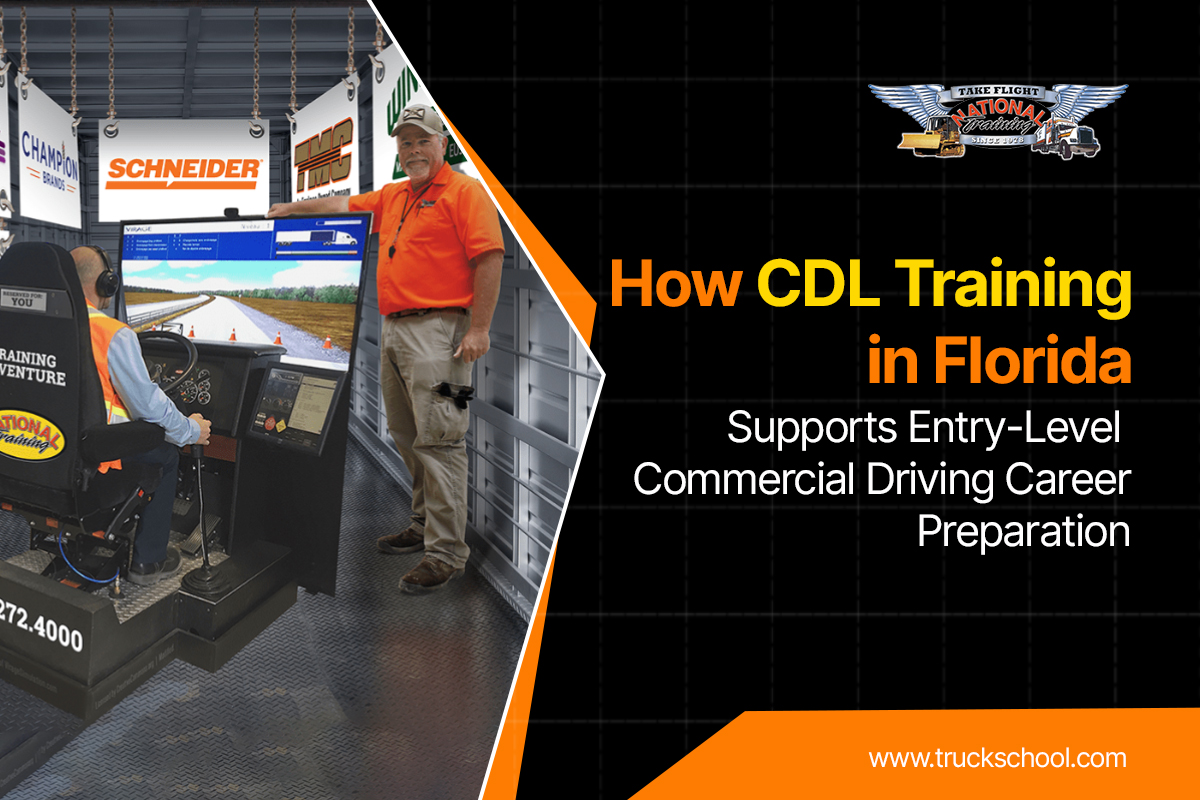
Practical instruction provides opportunities to work on vehicle operation under supervision. Depending on the curriculum and stage of instruction, students may practice vehicle inspections, basic controls, backing exercises, turning, positioning, and road operation.
These instructional activities are intended to help students develop familiarity with the skills addressed during training and testing. Individual progress and testing results vary.
Training Completion Is Different From CDL Testing
One of the most important distinctions for prospective students is the difference between completing a CDL training program and obtaining a commercial driver’s license. FMCSA requires applicable entry-level Class A and Class B applicants to complete the required ELDT before taking the CDL skills test. However, ELDT completion itself does not issue a CDL.
Applicants must separately satisfy applicable state and federal requirements and complete the required knowledge and skills testing processes. State driver licensing agencies are responsible for issuing commercial driver’s licenses to applicants who satisfy applicable requirements.
As a result, students should view CDL training in Florida as education and preparation for the licensing process rather than as a guarantee of licensing.
CDL Training in Green Cove Springs, Florida
National Training’s campus is located in Green Cove Springs, Florida. The location serves the greater Jacksonville area while also providing training opportunities for students who may travel from other parts of Florida or elsewhere.
Students considering CDL training in Florida should evaluate factors such as program requirements, training schedule, location, transportation arrangements, eligibility requirements, and the steps necessary to pursue their chosen CDL classification.
Understanding these details before enrolling can help prospective students determine whether a particular training program aligns with their educational objectives and circumstances.
Preparing for Commercial Driving Opportunities
Commercial driver training may be relevant to individuals exploring transportation-related occupations, changing career fields, returning to the workforce, or seeking formal instruction before pursuing a CDL. However, a training provider’s role is to provide education and training. National Training does not employ students as commercial drivers and does not control hiring decisions made by transportation companies or other employers.
Employers establish their own hiring standards. These may include CDL classification, driving history, age, experience, medical qualifications, background requirements, insurance requirements, endorsements, geographic availability, and other factors. Therefore, completing CDL training does not guarantee employment or acceptance by any particular employer.
Career Preparation and Student Support
Students may receive information intended to help them understand aspects of transitioning from training into the commercial transportation field. Such assistance should be understood as career preparation support rather than an employment promise.
Employment opportunities vary according to individual qualifications, employer requirements, location, economic conditions, licensing status, and other factors outside the training provider’s control. No training program can guarantee that a graduate will receive a job offer, earn a particular wage, work for a specific employer, or achieve a particular career outcome.
Making an Informed Decision About CDL Training
Choosing CDL training is an educational decision that should be made after reviewing the program curriculum, schedule, admission requirements, costs, applicable funding options, licensing requirements, and CDL testing process.
National Training’s 192 clock-hour Class A ELDT program provides structured education and practical instruction for students pursuing Class A CDL preparation. Normally completed over four weeks, the program is designed to provide training while students continue through the separate steps required for CDL testing and licensing.
Results vary by individual. Completion of training does not guarantee CDL issuance, employment, wages, employer acceptance, or any other specific outcome.
Explore CDL Training in Florida
If you are considering Class A commercial driver training, learning about the program requirements and licensing process can help you make an informed decision. Contact National Training to learn more about its 192-clock-hour Class A ELDT program in Green Cove Springs, Florida, including program scheduling, admission requirements, training content, and available student resources.
Financial assistance may be available for those who qualify. Eligibility and terms vary by funding source.
Licensed by the Florida Commission for Independent Education, License No. 335.
FAQs
Does completing CDL training guarantee a Class A CDL?
No. Completing training does not guarantee CDL issuance. Applicants must satisfy applicable state and federal requirements and complete the required CDL knowledge and skills testing processes.
Does National Training guarantee employment after CDL training?
No. National Training provides education and training, not employment. Completing the program does not guarantee employment, employer acceptance, wages, or any particular career result.
Where is National Training’s Florida campus?
National Training’s campus is located in Green Cove Springs, Florida. The school serves students from the greater Jacksonville area as well as students from other locations.
